Solace Technologies LLC

AI vision and smart sensing. One platform.

Solace Iris is two product lines under one brand. Iris Vision puts artificial intelligence (AI) computer vision on the cameras you already own - for retail, warehouses, campuses, and cities. Iris Waste adds fill-level sensing and smart routing to every bin. Same cloud, same dashboard, one partner.

2 Product lines Iris Vision and Iris Waste, one brand and one buying process
Up to 5 yrs Battery life on radio-frequency (RF) ultrasonic waste builds, subject to configuration
1 Platform Same controller, cloud, APIs, and dashboard

Product Line 01 - Iris Vision

AI computer vision on the cameras you already own.

Iris Vision connects to your existing closed-circuit television (CCTV) and network cameras - no rip-and-replace. Solace AI models turn live footage into alerts, counts, and reports your team can act on, while video stays on your network.

  • Use the cameras you have. Iris Vision runs on top of the surveillance estate you already paid for.
  • Privacy by design. Footage is analyzed on site; only lightweight event data leaves your network.
  • One dashboard. Vision alerts land in the same Solace Iris platform as waste sensing - one login, one audit trail.
  • Custom models. Solace's AI team can train detections for site-specific objects and events.
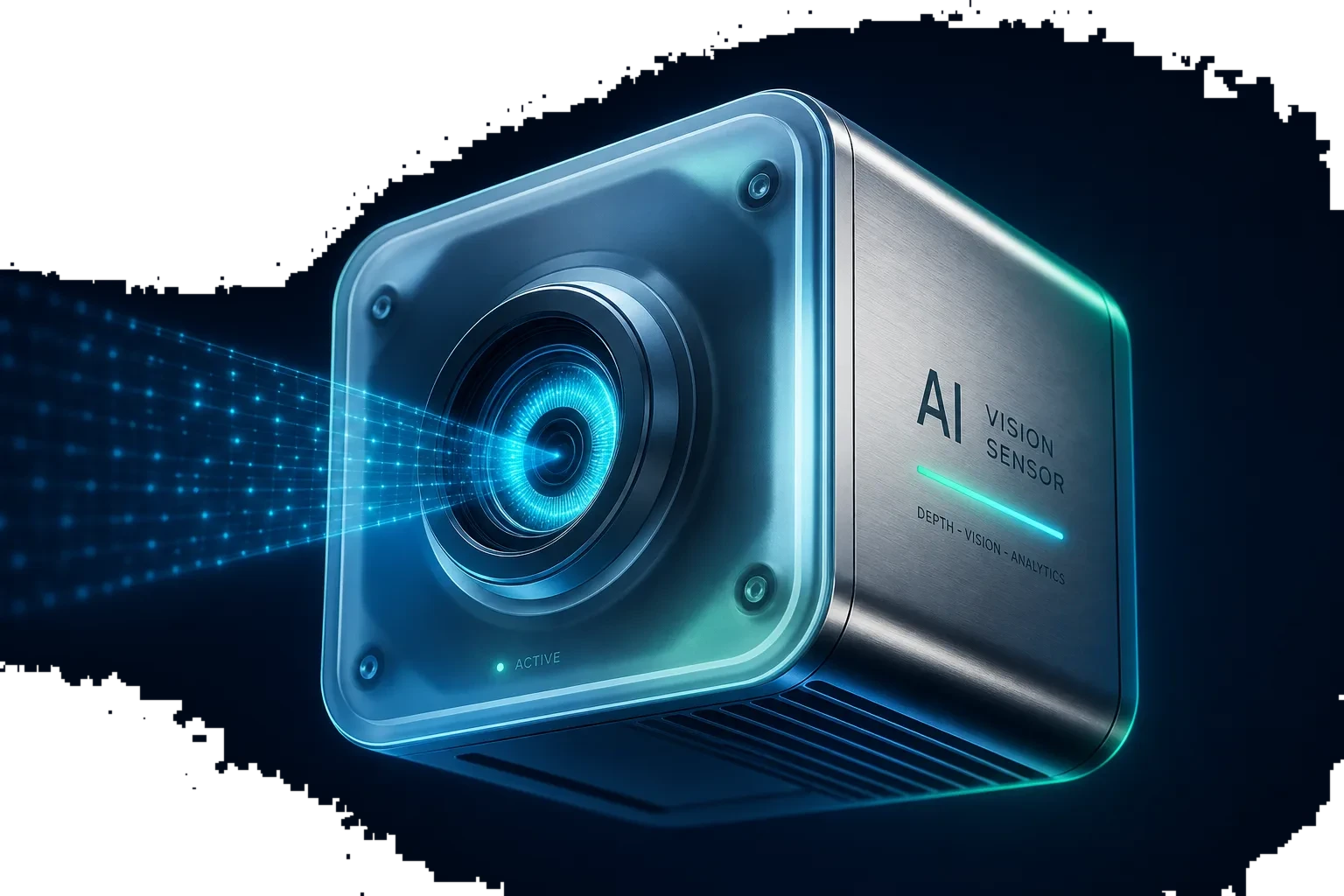
Solace Iris AI vision sensor render with a glowing lens and edge-AI scanning grid
Iris Vision Use Cases

Four places Iris Vision goes to work.

The same vision platform, tuned to what your operation needs to see. Every deployment starts with a scoped pilot on your own cameras.

Retail surveillance

  • Loss prevention: flag suspicious activity at entrances, exits, and high-value aisles while it is happening.
  • Queue management: see checkout queues building and act before customers walk out.
  • Visitor analytics: understand footfall and dwell patterns by zone and time of day.
Book a demo

Warehouses & logistics

  • Safety zones: alert the moment people enter forklift routes or restricted areas.
  • PPE compliance: spot missing personal protective equipment (PPE) such as helmets and vests on camera.
  • Dock activity: track loading-bay occupancy and idle trailers without walking the floor.
Book a demo

Corporate campuses

  • Access: flag tailgating and after-hours entries at doors, gates, and parking.
  • Occupancy: see how floors, rooms, and parking are actually used.
  • Perimeter: watch fence lines and blind spots without adding guard posts.
Book a demo

Cities & public realm

  • Public-space awareness: monitor plazas, corridors, and transit stops from existing city cameras.
  • Illegal dumping: detect dumping events and overflowing public bins, with snapshot evidence.
  • Faster response: route alerts to the right team instead of waiting for complaints.
Book a demo
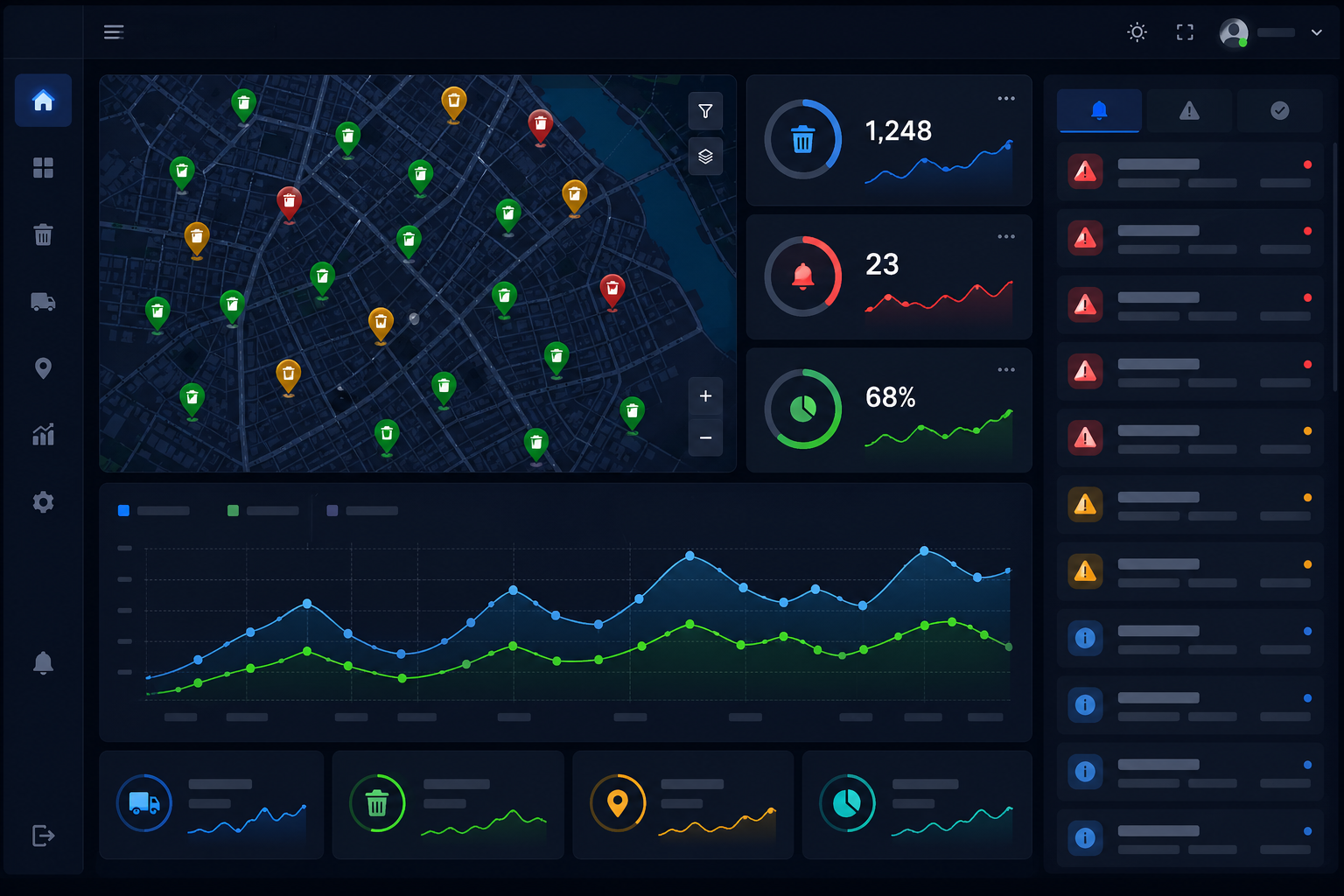
Solace Iris dashboard showing live alerts and analytics on a dark interface
From Camera to Decision

Alerts your team can act on.

Detections arrive as clear events - what happened, where, and the snapshot to prove it. Not sure which use case to start with? An AI discovery session maps your cameras to outcomes, free of charge.

Product Line 02 - Iris Waste

Smart waste sensing. Built modular.

Iris Waste combines a central intelligent controller with modular sensing, power, connectivity, and mounting options. One product line adapts to streets, compounds, malls, airports, ports, and industrial sites.

The Challenge

Waste operations still run on guesswork.

Fixed schedules create overflow, wasted trips, high fuel burn, and poor visibility. Iris replaces blind operations with measured, connected, and configurable intelligence.

Overflowing bins

Public image and hygiene suffer when collections are not demand-driven.

Half-empty pickups

Trucks, fuel, labor, and route hours are wasted on bins that do not need service.

No real visibility

Managers see complaints after the fact instead of seeing the bin fleet in real time.

One-size-fits-all hardware

Most products force the same sensor into every site, even when the environment is different.

The Promise

Iris tells you a story, not just a number.

The same controller, the same cloud, the same dashboard - regardless of how Iris is configured.

Measures fill level

Ultrasonic or AI computer vision, picked per site.

Recognizes waste type

Recyclable, organic, or contamination - flagged at the source.

Detects events

Fire, tilt, theft, and overflow - alerts the moment they happen.

Tells your team

Which bin to collect, when, and why - not just a fill number.

The Core Idea

One controller at the center. Four modular choices around it.

Iris is built around a smart core. Around that core, customers choose how the product sees, powers, connects, and mounts. This makes the product easy to understand and easy to adapt.

See it

Sensing

Ultrasonic or AI Computer Vision.

Connect it

Connectivity

4G, Wi-Fi, Ethernet, or RF to an Iris Gateway.

Mount it

Mounting

Bin, wall, ceiling, or external pole.

Power it

Power

Battery, 220 VAC mains, solar, or PoE.

Smart Core

Iris Controller

Secure identity, BLE setup, OTA updates, and standardized module interfaces for sensing, power, radio, and installation form factor.

The Smart Core

The Iris Controller.

The same controller in every Iris - one product to evaluate, one platform to manage. Sensing, power, and radio modules attach over a standardized internal bus, so the variant changes without changing the brain.

  • 32-bit ARM microcontroller - ultra-low power.
  • Secure element with per-device X.509 identity.
  • Bluetooth Low Energy for in-field configuration.
  • Standardized internal bus for sensing, power, and radio modules.
  • Over-the-air firmware updates with rollback.
Variant System

Understand the product in four quick steps.

Every Iris Waste configuration is built by selecting one option from each category. The result becomes the final SKU (stock-keeping unit).

01

Sensing

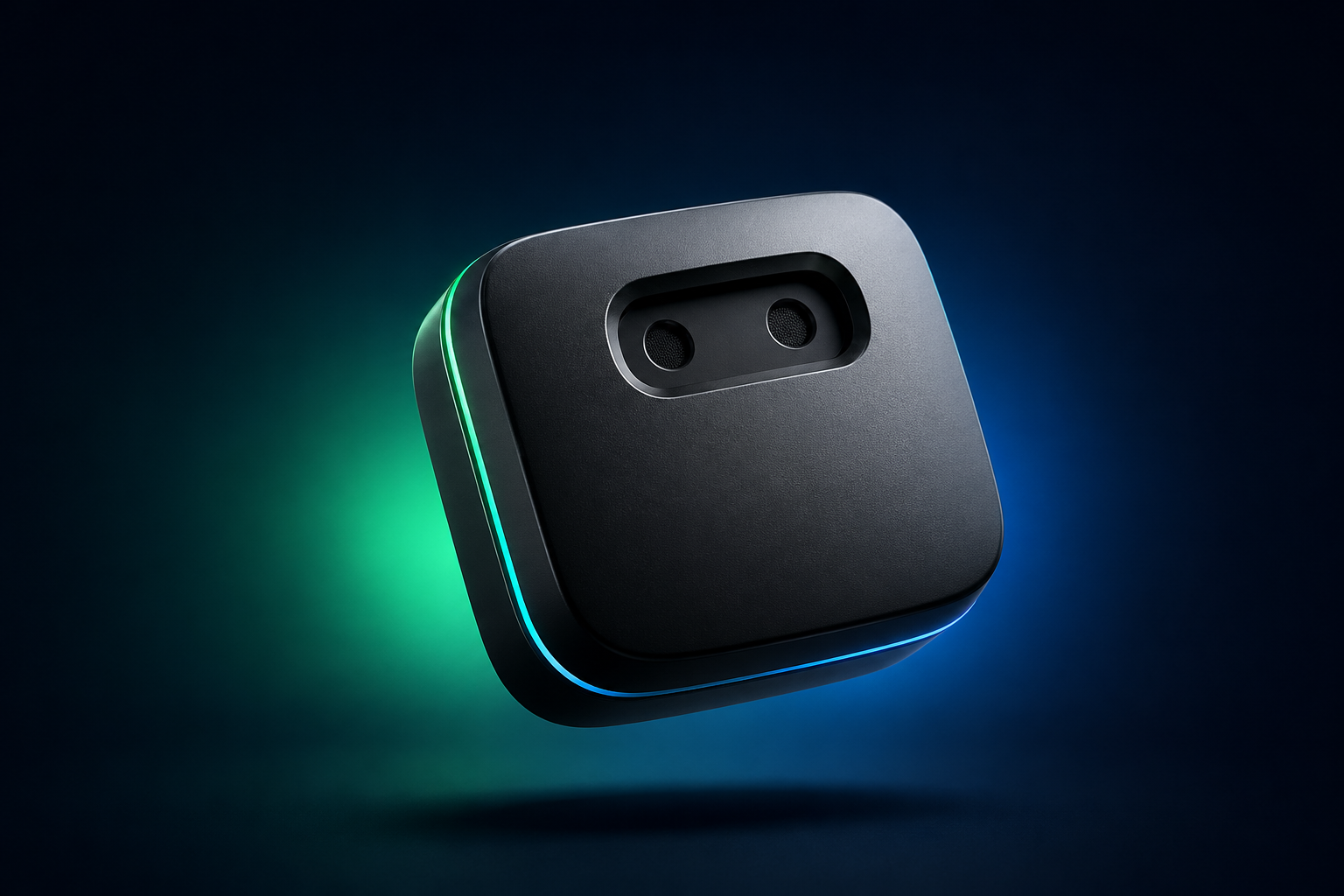
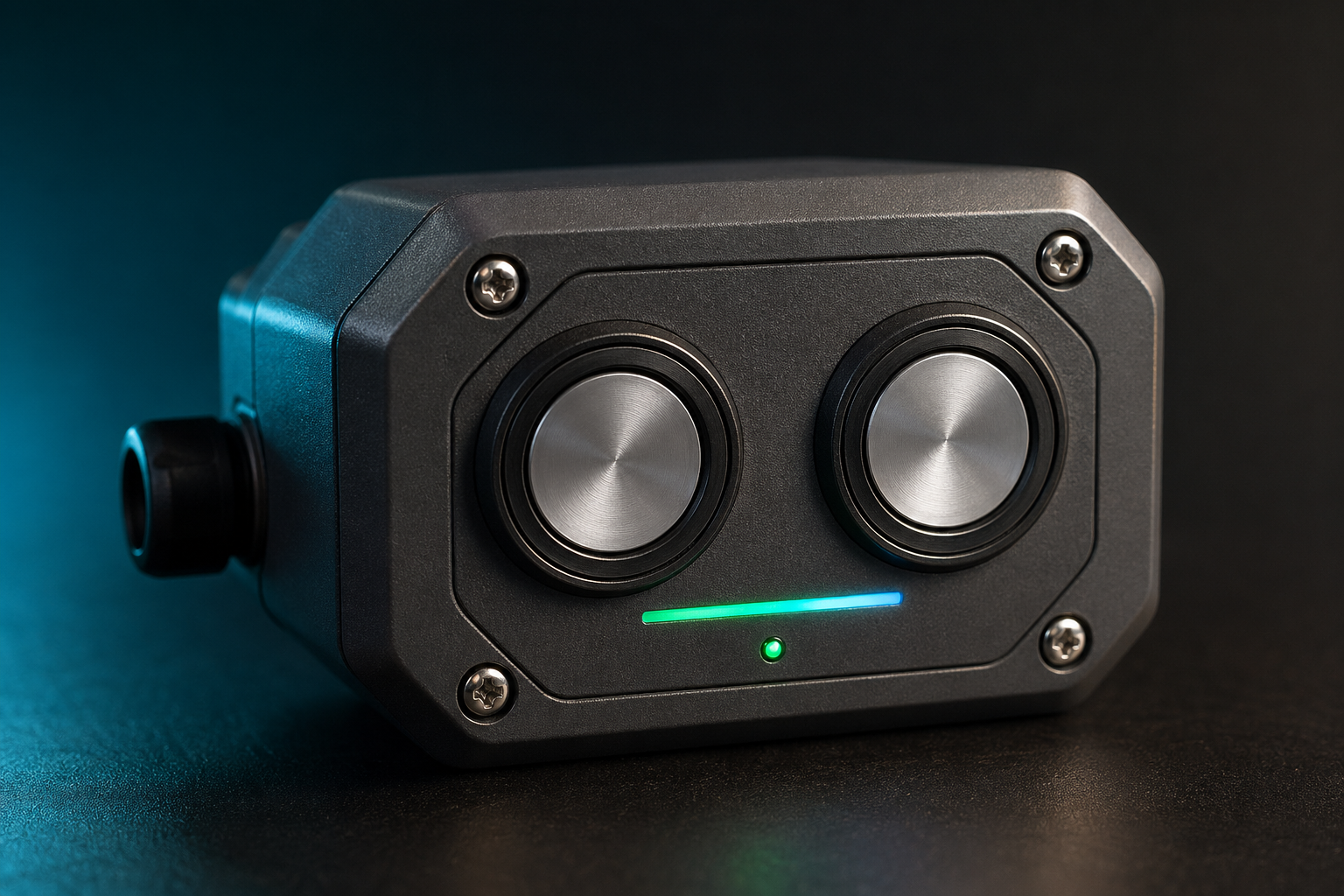
  • Close-up of the Solace Iris ultrasonic sensor face showing two circular transducer eyes
    US Ultrasonic

    Time-of-flight sound, 4 m range, +/-2 cm accuracy. Works in pitch dark. Lowest cost.

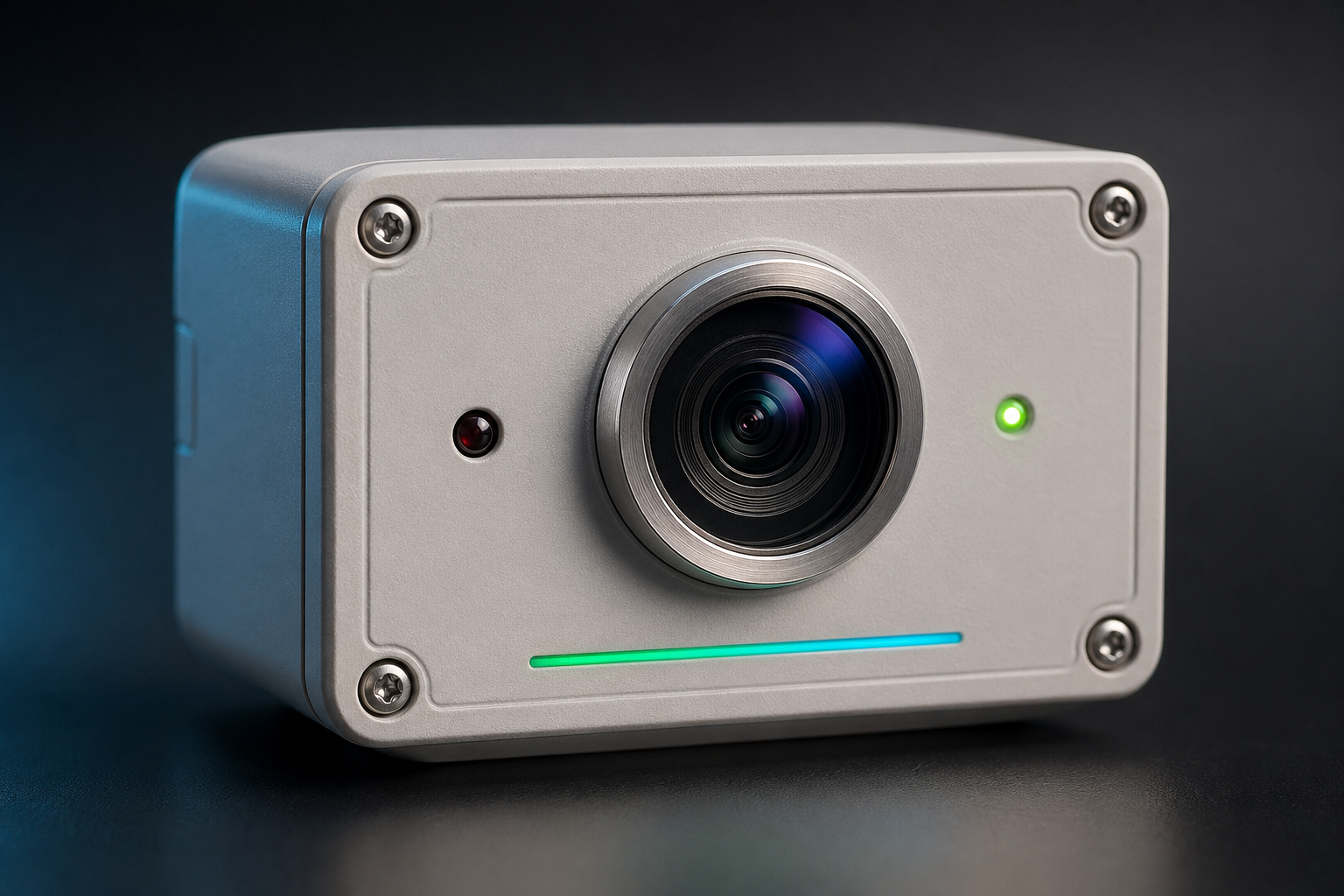
  • Close-up of the Solace Iris AI vision sensor face showing a single camera lens
    AIV AI Computer Vision

    On-device AI. Real fill level on irregular waste. Identifies waste type, contamination, overflow, and bin presence.

02

Power

  • BAT Battery

    Replaceable Li-SOCl2 cells. Up to 5-yr life on RF ultrasonic builds. Best for outdoor and mobile bins.

  • AC 220 VAC Mains

    Direct mains connection, never a battery to swap. Best for permanent indoor sites.

  • SOL Solar + Battery

    Integrated/external solar panel with battery buffer. Autonomous outdoor operation. Best for street and pole installations.

  • POE Power over Ethernet

    One cable for power and data. Best for back-of-house and IT-managed sites with structured cabling.

03

Connectivity

  • 4G LTE-M / NB-IoT

    Cellular, works everywhere. Best for outdoor and dispersed bins.

  • WIFI Wi-Fi

    2.4 GHz, WPA2 / WPA2-Enterprise. Best for indoor sites with existing wireless.

  • ETH Ethernet

    10/100, RJ-45, optional PoE on the same cable. Best for IT-managed permanent installations.

  • RF Sub-GHz to Iris Gateway

    Long-range radio to a single on-site gateway, which backhauls the whole fleet. Best for dense sites.

04

Mounting

  • BIN Bin Mount

    Battery-powered. Wedge-shaped enclosure builds the downward angle in. Travels with the bin.

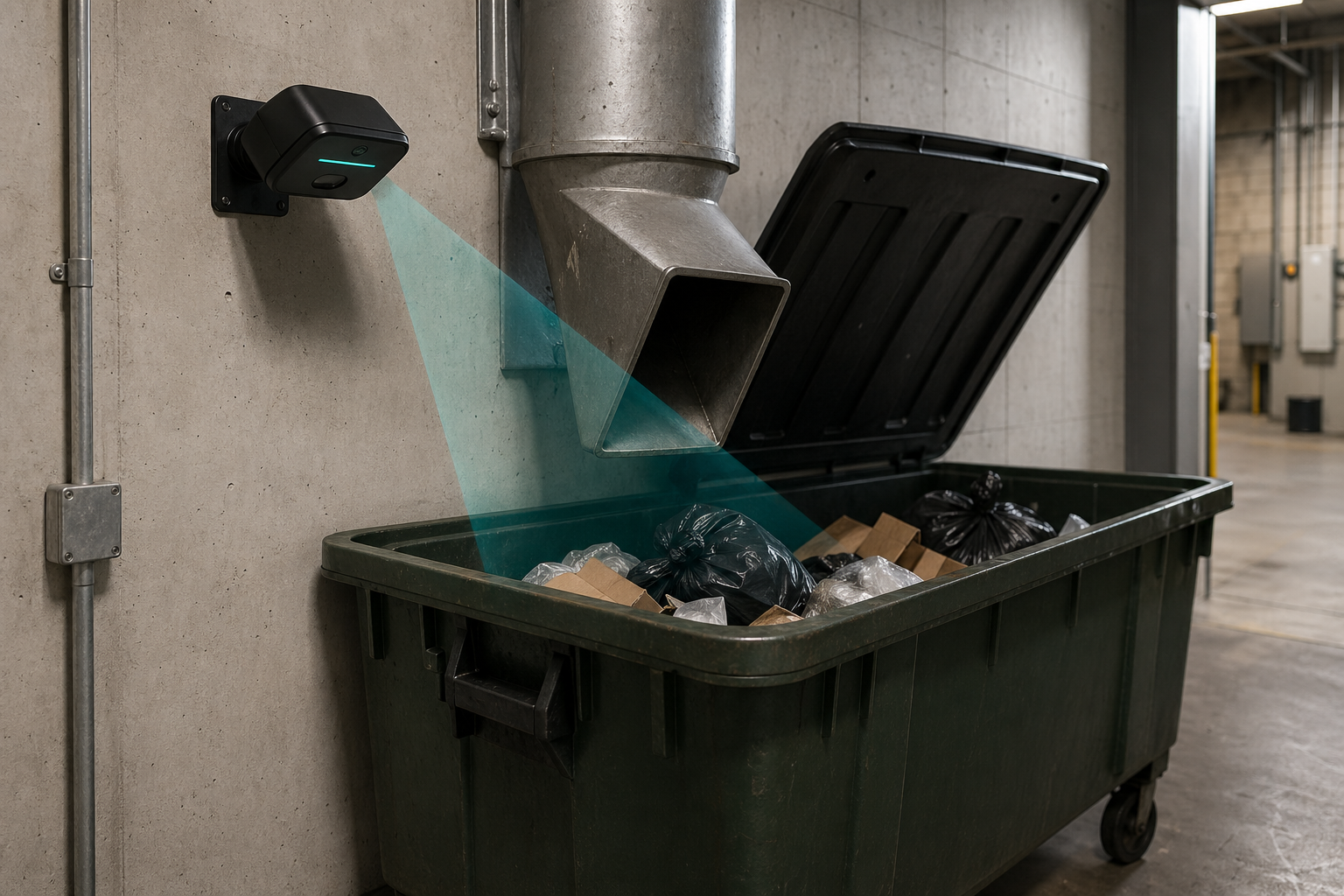
  • WAL Wall Mount

    Flat steel plate. Compound bin sheds, back-of-house refuse rooms, sheltered enclosures.

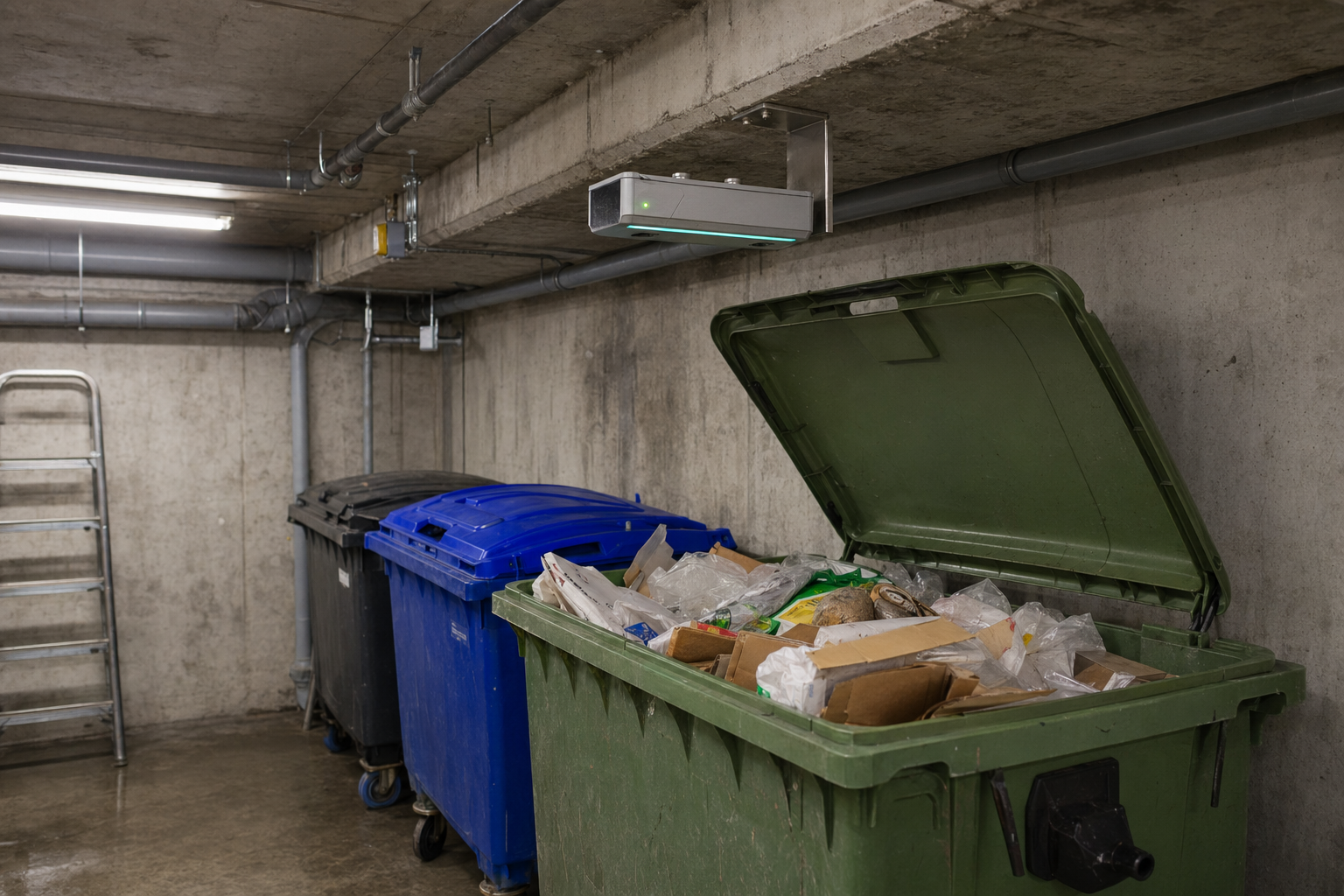
  • CEI Ceiling Mount

    L-bracket from a beam. Sensor faces straight down. Better accuracy, no lid needed.

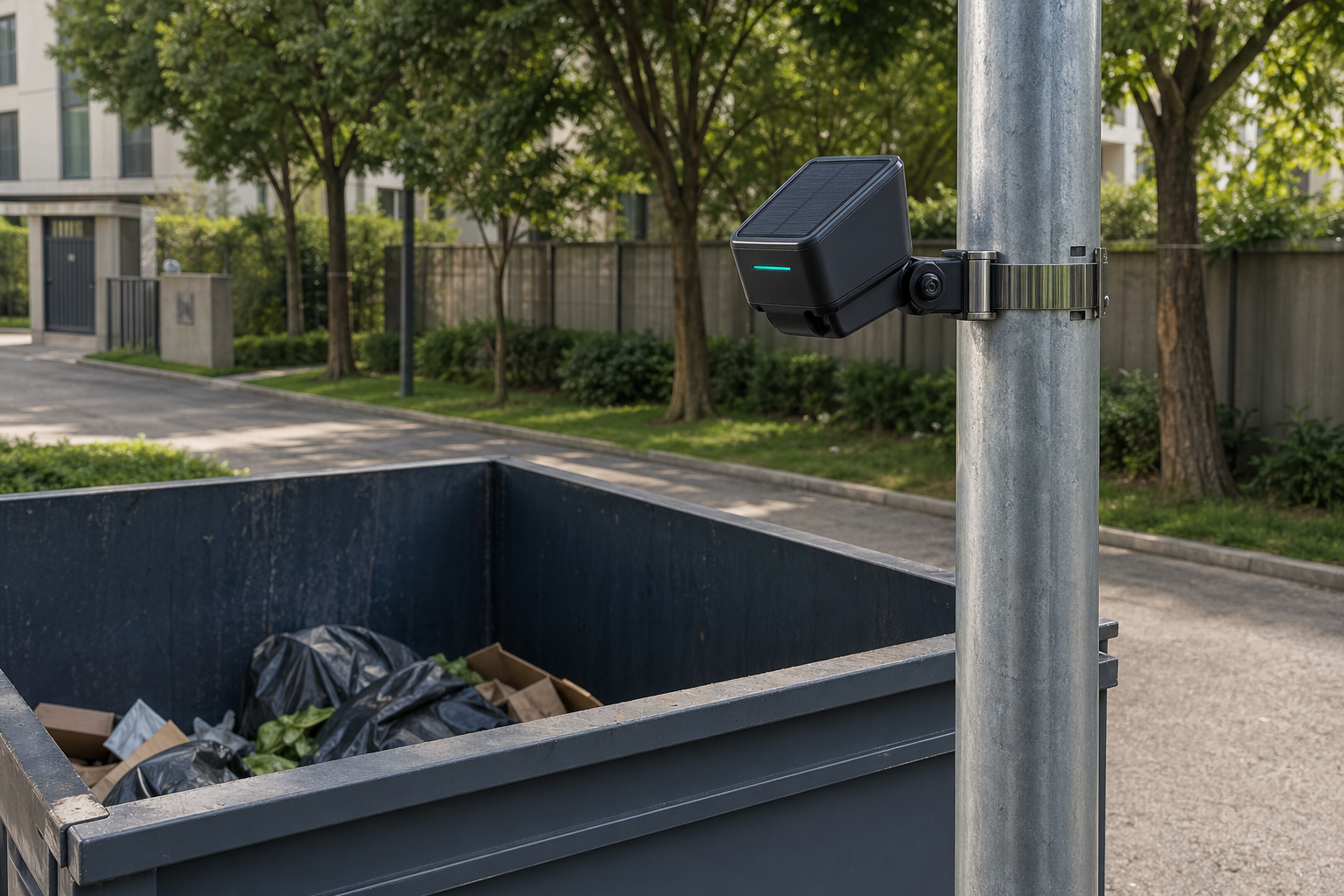
  • POL Pole Mount

    IP66 outdoor pole clamp, 40-100 mm poles. Built for solar + AI vision smart-city stations.

Battery Life

Conservative battery life by connectivity.

Battery estimates are stated on the safe side. Actual runtime depends on reporting frequency, signal strength, temperature, and AI capture schedule.

Build Connectivity Conservative battery life Assumption
IRIS-US-BAT-4G-* 4G LTE-M / NB-IoT Up to 2 years 4 uplinks/day, 10-min sensing cycle
IRIS-US-BAT-WIFI-* Wi-Fi Up to 2 years 4 uplinks/day
IRIS-US-BAT-RF-* Sub-GHz RF Up to 5 years 24 messages/day
IRIS-AIV-BAT-* Scheduled AIV mode Up to 1 year 4 captures/day
Interactive Builder

Build your Iris.

Pick one option from each axis and the product identity writes itself. This is the fastest way to explain the product to a customer or partner.

Generated SKU

IRIS-US-BAT-4G-BIN

Battery-powered ultrasonic build with cellular backhaul for distributed street bins.

Street bins Compounds Indoor rooms Smart city stations

Three example builds

IRIS-US-BAT-4G-BIN

Public street wheelie bin.

IRIS-AIV-AC-ETH-CEI

Indoor mall recycling room.

IRIS-AIV-SOL-RF-POL

Smart-city flagship street installation.

Mounting Options

One sensor. Four ways to install it.

Iris adapts to the asset, not the other way around. Pick the mounting option that fits the bin, the room, or the public station.

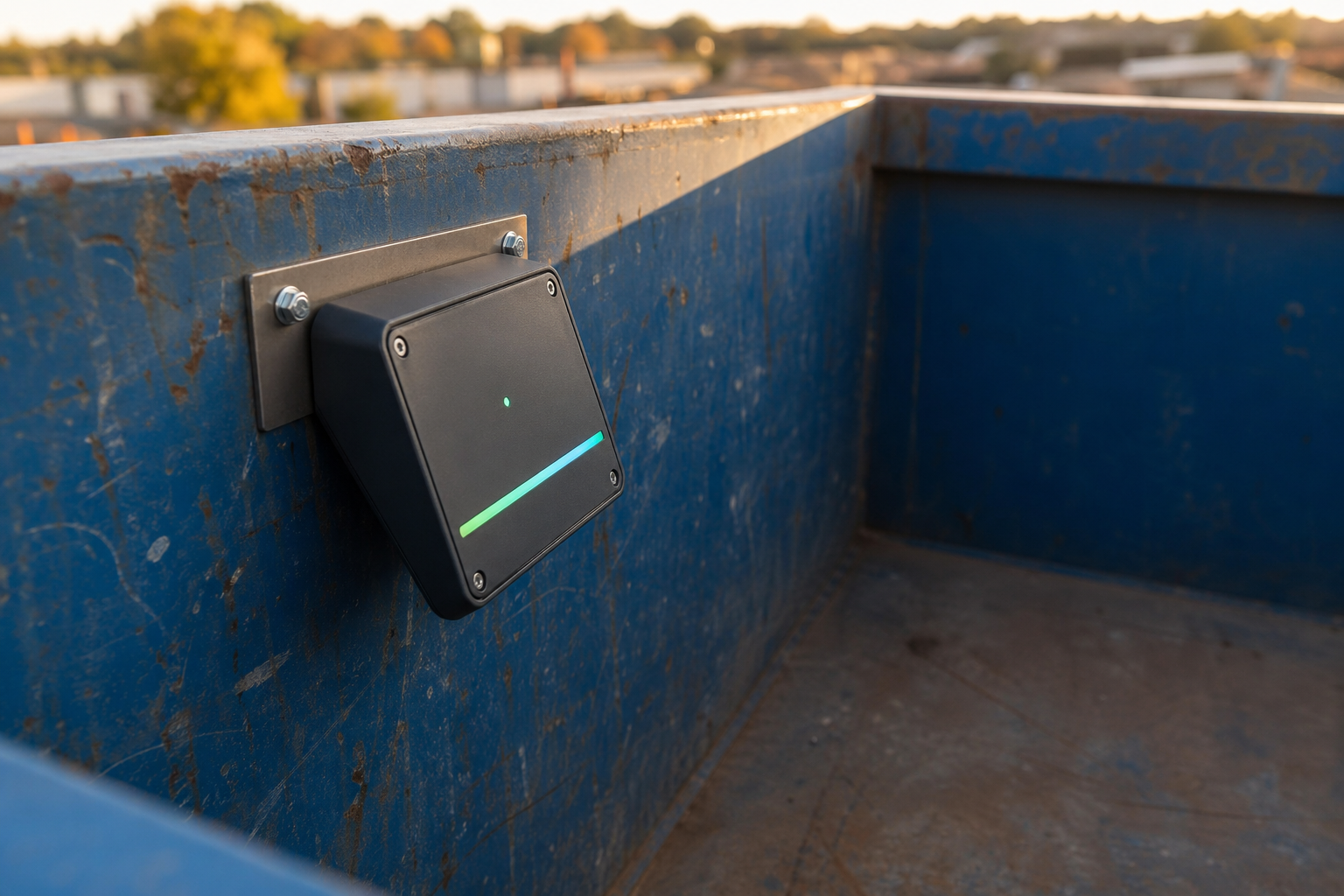
Solace Iris battery-powered ultrasonic sensor mounted inside a blue industrial skip bin, wedge-shaped enclosure tilted downward to measure fill level
BIN

Bin Mount

Battery-powered sensor fitted inside the bin or under the lid. Wedge-shaped housing builds the downward angle into the body, so the bracket stays simple and flat.

Solace Iris sensor wall-mounted in an outdoor bin shed above three colored wheelie bins
WAL

Wall Mount

Fixed installation on a wall above a row of bins. Ideal for bin sheds, compound enclosures, and back-of-house refuse rooms where the asset stays in place.

Solace Iris sensor suspended on a perpendicular L-bracket from a concrete ceiling beam over an open-lid green industrial bin in a basement refuse room
CEI

Ceiling Mount

Suspended from the ceiling on an articulated bracket, looking straight down into open-lid bins. Best for indoor refuse rooms, malls, airports, and hospitals.

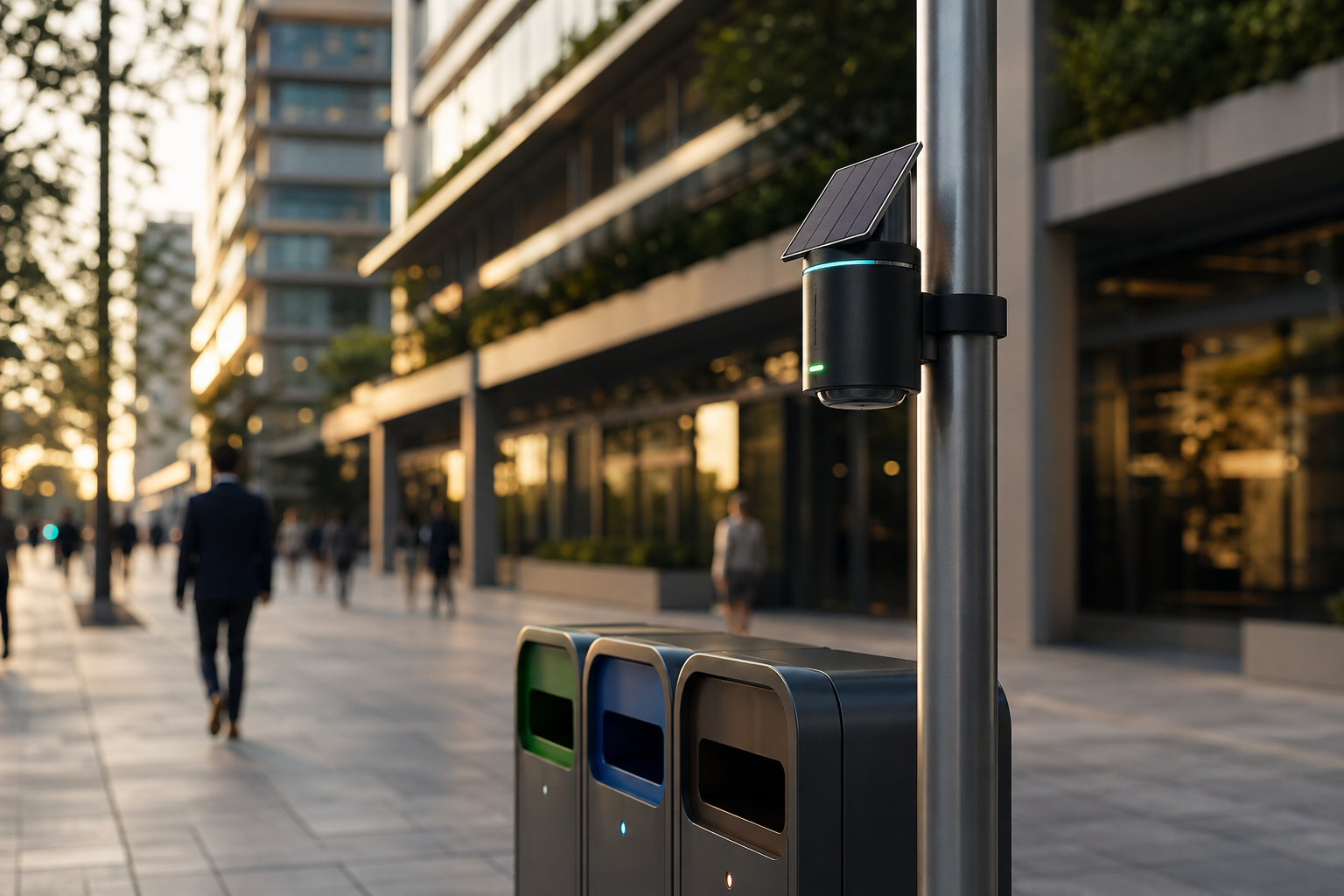
Solace Iris pole-mounted AI vision sensor with solar panel above public bins on an outdoor city plaza
POL

Pole Mount

External pole installation with optional solar power for fully autonomous public deployments. Pairs with AI Vision for street stations and smart-city corridors.

Why It Wins

Five differentiators that typical waste sensors do not offer.

AI + Ultrasonic on one platform

Choose the right sensing layer without changing the controller, cloud, or operator workflow.

Solar deployments

Autonomous outdoor operation with integrated solar and battery buffer for harsh field sites.

External pole mounting

Ideal for street stations, skips, and fixed assets where lid-mounted hardware is limiting.

RF gateway architecture

One backhaul for hundreds of sensors, lower operating expense (OPEX), and better underground or indoor reach.

True 220 VAC option

Permanent powered installations for malls, hospitals, airports, and industrial infrastructure.

Comparison

Five things only Iris does.

Side-by-side against the most common smart-waste sensors on the market today.

Capability Rankup DF703 Sensoneo Quatro WASTECH Solace Iris
AI / waste-type recognition No No No Yes
Solar option No No No Yes
External pole mount No No No Yes
Dedicated RF gateway No Mesh only No Yes
220 VAC mains option No No No Yes
Connectivity options 4G LoRa / Sigfox / NB-IoT / GSM 4G 4G + Wi-Fi + Ethernet/PoE + RF
Power options Battery only Battery only Battery only Battery + AC + Solar + PoE
Mounting options Lid / side Screws / clench / rails Lid / side Bin + Wall + Ceiling + Pole
Advanced Intelligence

AI Computer Vision at the edge.

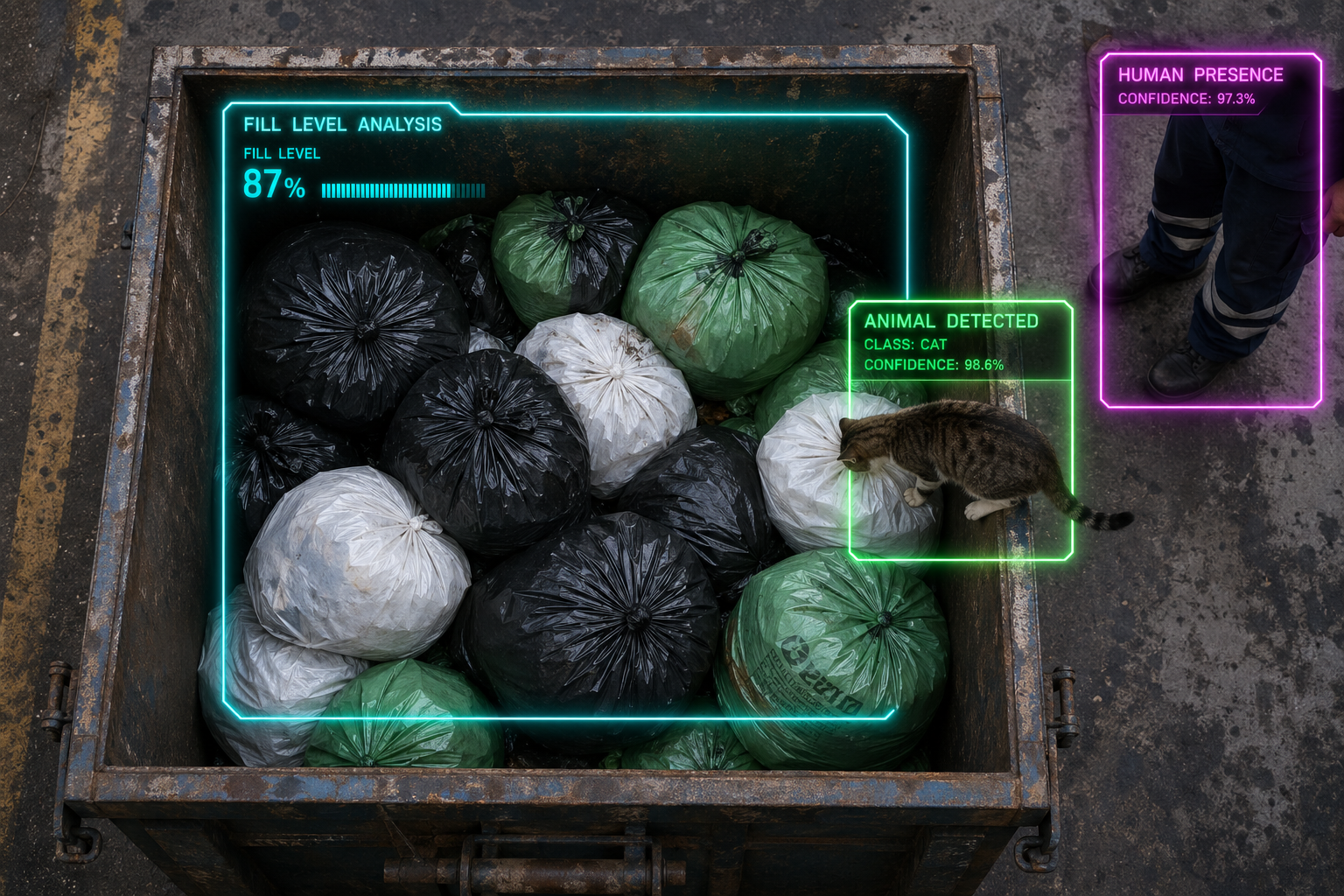
The Iris AIV variant replaces blind proximity sensing with a 5MP edge-AI camera, built on the same Solace vision stack as Iris Vision. It runs machine-learning models locally on the device, sending only lightweight event data to the cloud to save bandwidth and preserve privacy.

  • Fill Level & Empties: Measures volume from bagged waste and logs emptying events to track crew attendance.
  • Animal Detection: Captures snapshots of stray animals (cats, dogs, rodents) interacting with the bin.
  • Human Presence: Detects workers or pedestrians around the bin for safety, attendance, or security logging.
  • Custom ML Models: Solace's AI team can train the sensor to recognize site-specific objects, overflowing bags, or illegal dumping events.
AI computer vision view from above into a waste bin, showing neon bounding boxes detecting bagged waste, a stray cat, and human presence.
Iris MeshTech RF

One backhaul. Hundreds of sensors. One SIM.

In compounds, malls, industrial parks, and basements, Solace Iris sensors can transmit over long-range RF to an Iris Gateway. The gateway then forwards all data through one Ethernet, Wi-Fi, or 4G uplink.

  • 500+ sensors per Iris RF Gateway within range
  • One Ethernet, Wi-Fi, or 4G uplink for the whole site
  • Up to 5-year sensor battery life on RF ultrasonic builds
  • AES-128 end-to-end encryption
  • Best for residential compounds, malls, ports, refineries, and industrial parks where cellular reach is poor and SIM economics break down
Solace Iris Cloud
Iris RF Gateway
Iris Sensor Iris Sensor Iris Sensor Iris Sensor
Iris HUB

Local first. Cloud connected.

Every Iris deployment includes the Iris HUB - a compact on-premise server on the customer LAN that aggregates sensors, runs local logic, and syncs with Solace Iris Cloud over the internet.

What it does

  • Aggregates sensors over 4G, Wi-Fi, Ethernet, or sub-GHz RF (via the Iris RF Gateway).
  • Runs local rules and forwards events to Solace Iris Cloud.
  • AIV variant: HUB needs IP access to each CV sensor for direct inference polling.
  • Local buffering: 30 days of events stored during an internet outage, auto-syncs on reconnect.

What it needs

  • One LAN port on the customer network.
  • Internet access for cloud sync (outbound only).
  • 500+ sensors per Iris RF Gateway. One SIM for the whole site.
  • Up to 5-year RF sensor battery life in field conditions.
Platform

Solace Iris Cloud optional features.

Regardless of the physical build, all data lands in the same enterprise cloud. Four modules, one tenant, one login.

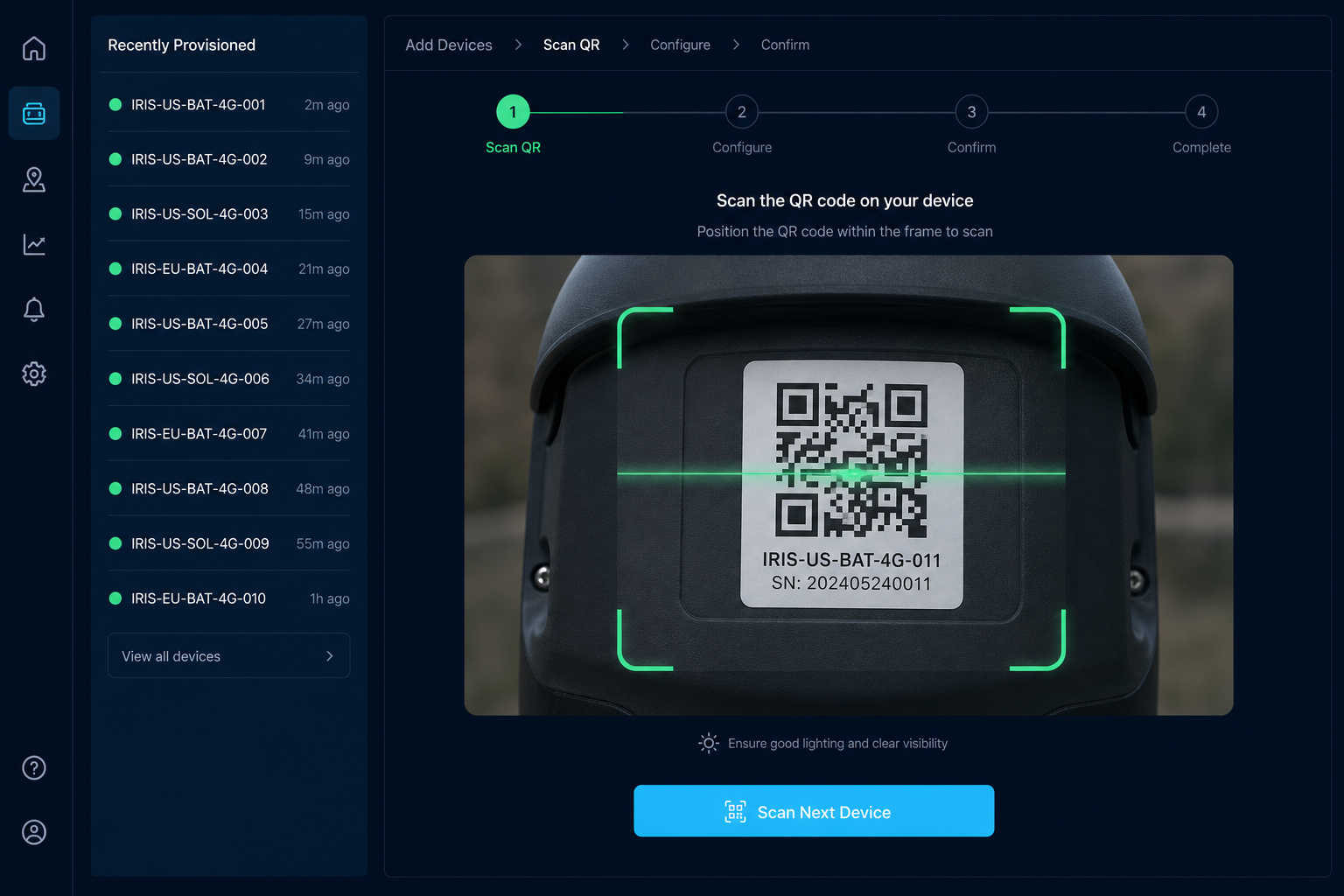
Iris setup and provisioning screen showing a step-by-step bin onboarding wizard with QR scan and configuration fields
Module 01

Setup & Provisioning

QR-driven onboarding, bin inventory, tenant creation, and integration set-up.

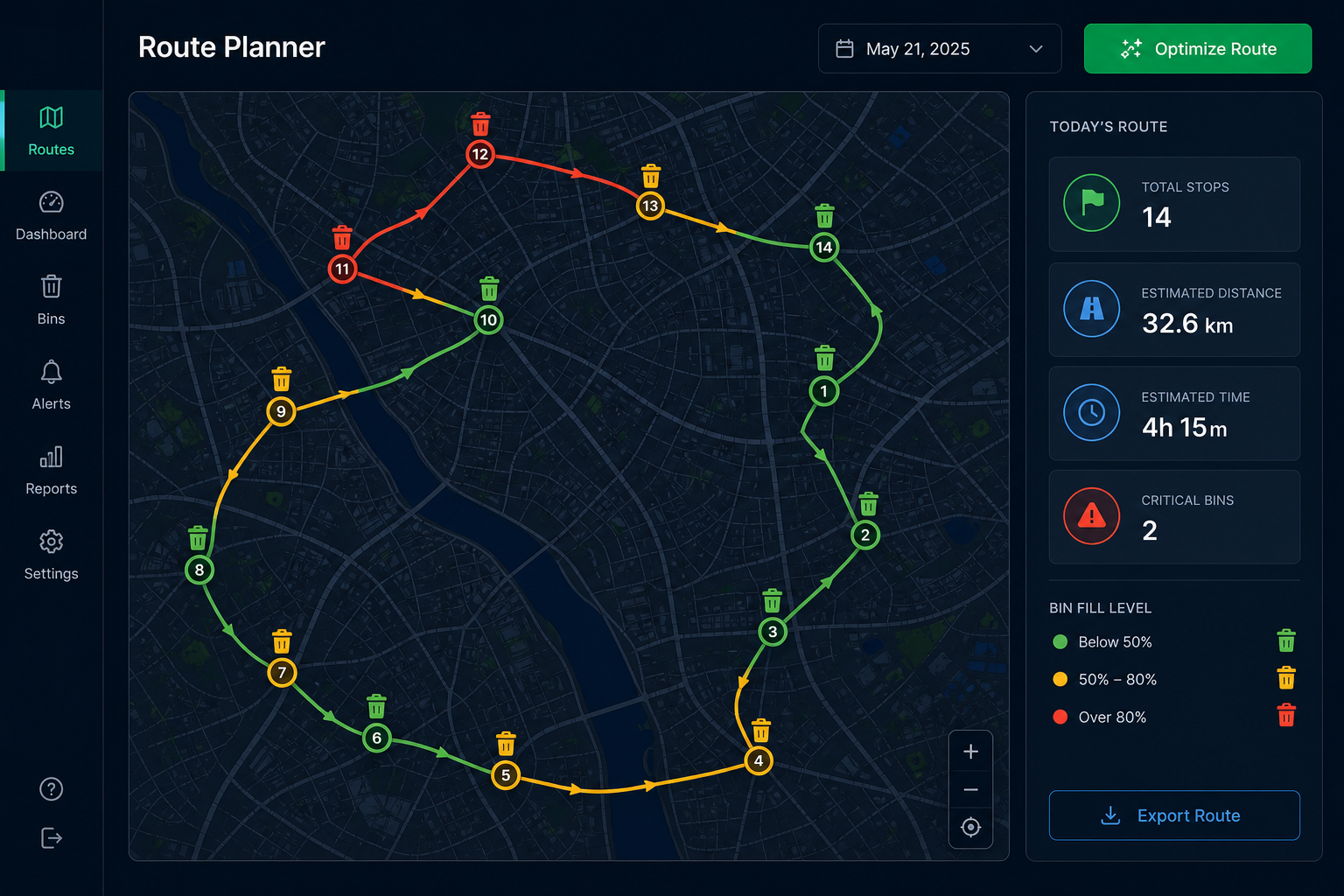
Iris route optimisation screen showing an optimized collection route across a city map with stops and ETA
Module 02

Route Optimisation

Demand-driven routes that skip half-empty bins and prioritise the ones that matter today.

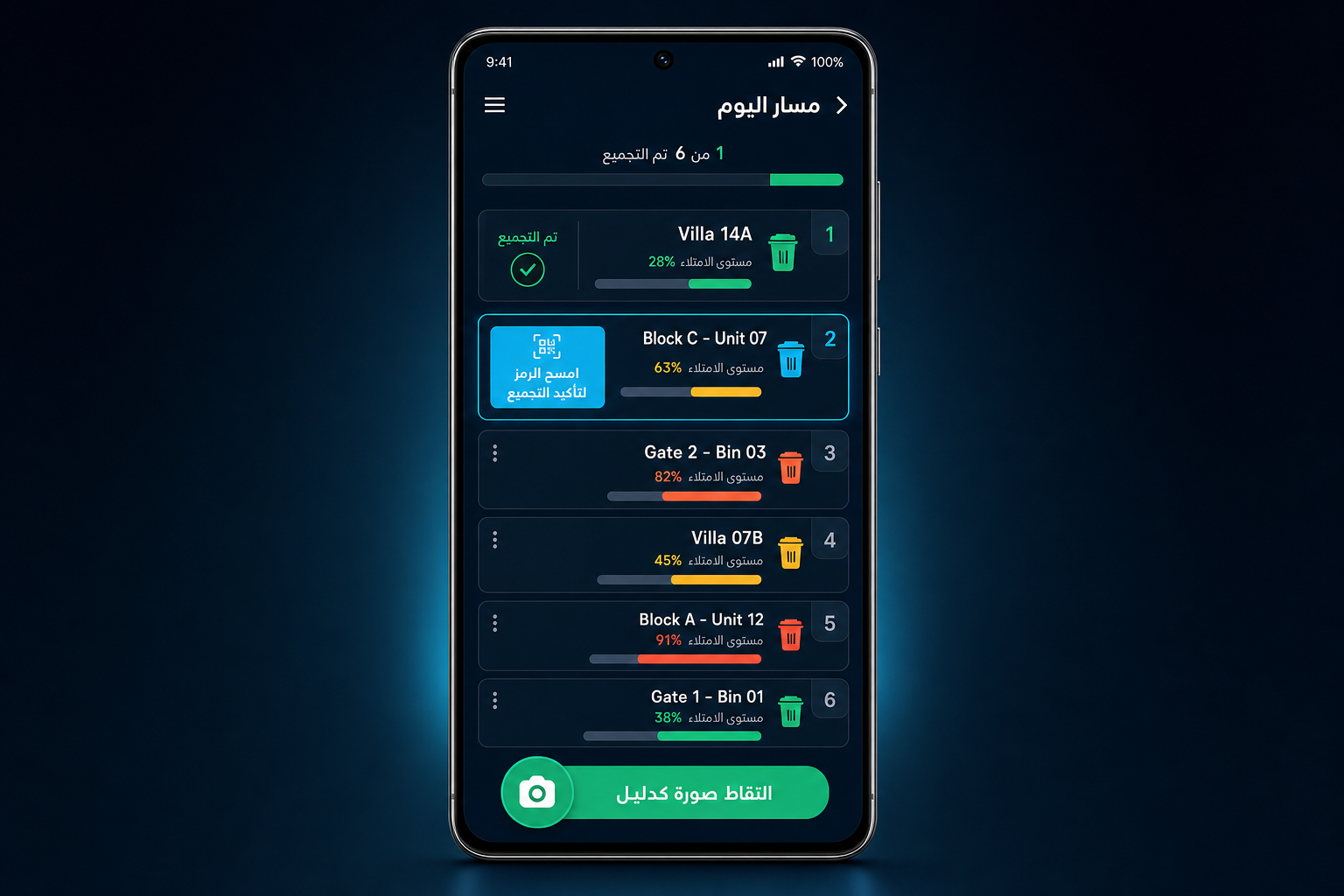
Iris mobile crew app on a phone showing today's route, QR scan to mark collected, and photo evidence capture
Module 03

Mobile Crew App

Today's route on mobile. Scan QR to mark collected. Photo evidence capture.

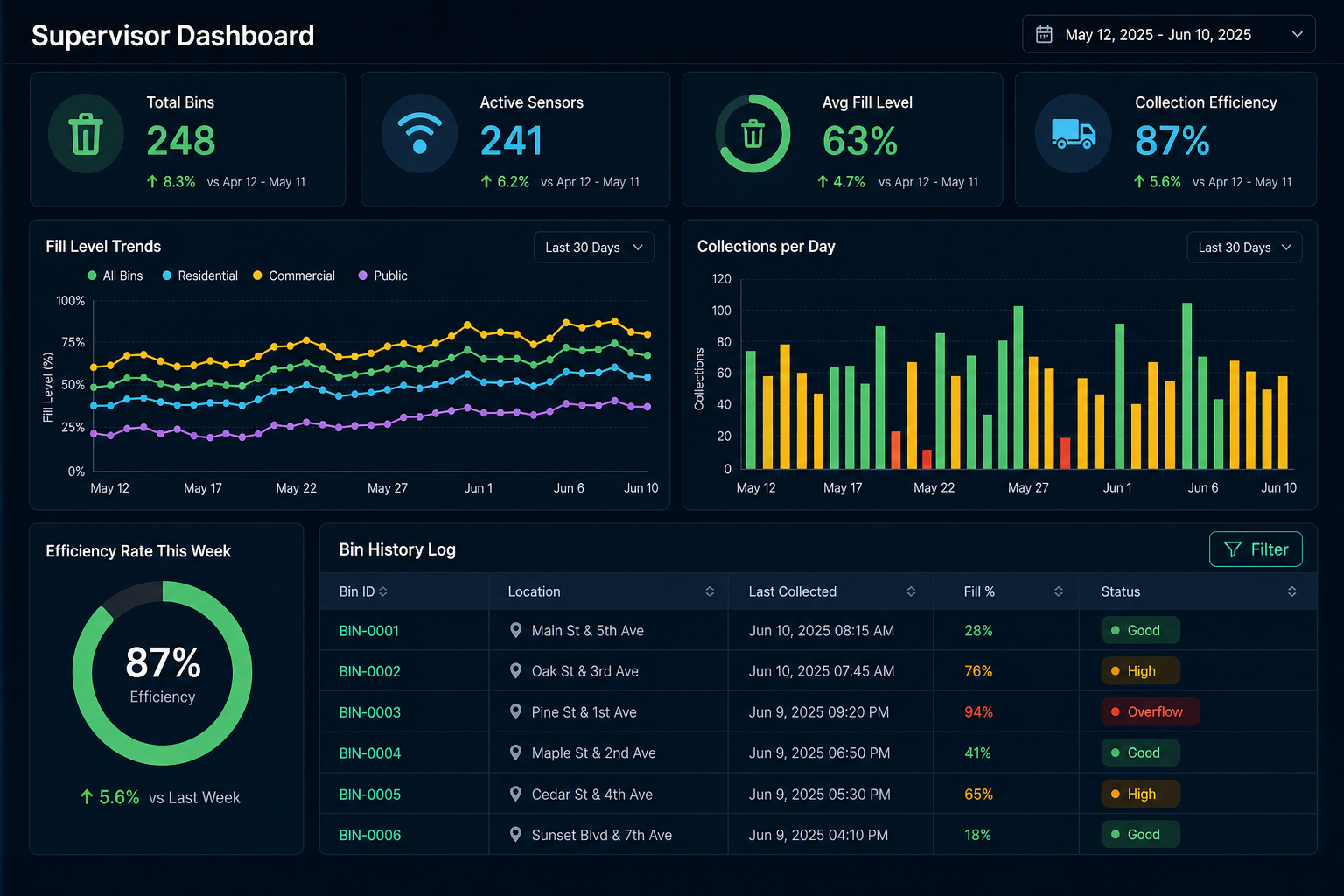
Iris supervisor dashboard showing a live map of every bin with color-coded fill levels, KPI tiles, and recent alerts
Module 04

Supervisor Dashboard

Live map of every bin, color-coded fill levels, fire / tilt / overflow alerts, daily reports.

For Supervisors

  • Live map of every bin
  • Color-coded fill levels
  • Fire / tilt / overflow alerts
  • Daily reports, audit trails

For Crews

  • Today's route on mobile
  • Scan QR to mark collected
  • Photo evidence capture
  • Setup, provisioning, and route optimisation

For Integrators

  • REST + MQTT APIs, signed webhooks
  • SAP, Oracle, Power BI, Modbus TCP
  • Multi-tenant SaaS, multi-site rollups
  • HUB syncs locally during outages
Outcomes

What Iris saves you.

~30% Fewer collection trips
~25% Lower fuel and CO2 footprint
~40% Fewer overflow complaints
~50% Lower OPEX in mature deployments

Indicative figures from independent waste-IoT studies and pilot benchmarks. Actual results depend on configuration, route design, and local operations - we benchmark a pilot on your sites and let the data make the case.

Iris Waste Use Cases

Three sites. Three builds. One platform.

Pole-mounted Solace Iris sensor with solar panel above public recycling bins on a modern city street at golden hour

Cities & public realm

Build: IRIS-AIV-SOL-4G-POL
Public street bins, solar, AI sorting recyclables at every drop, autonomous and grid-free.

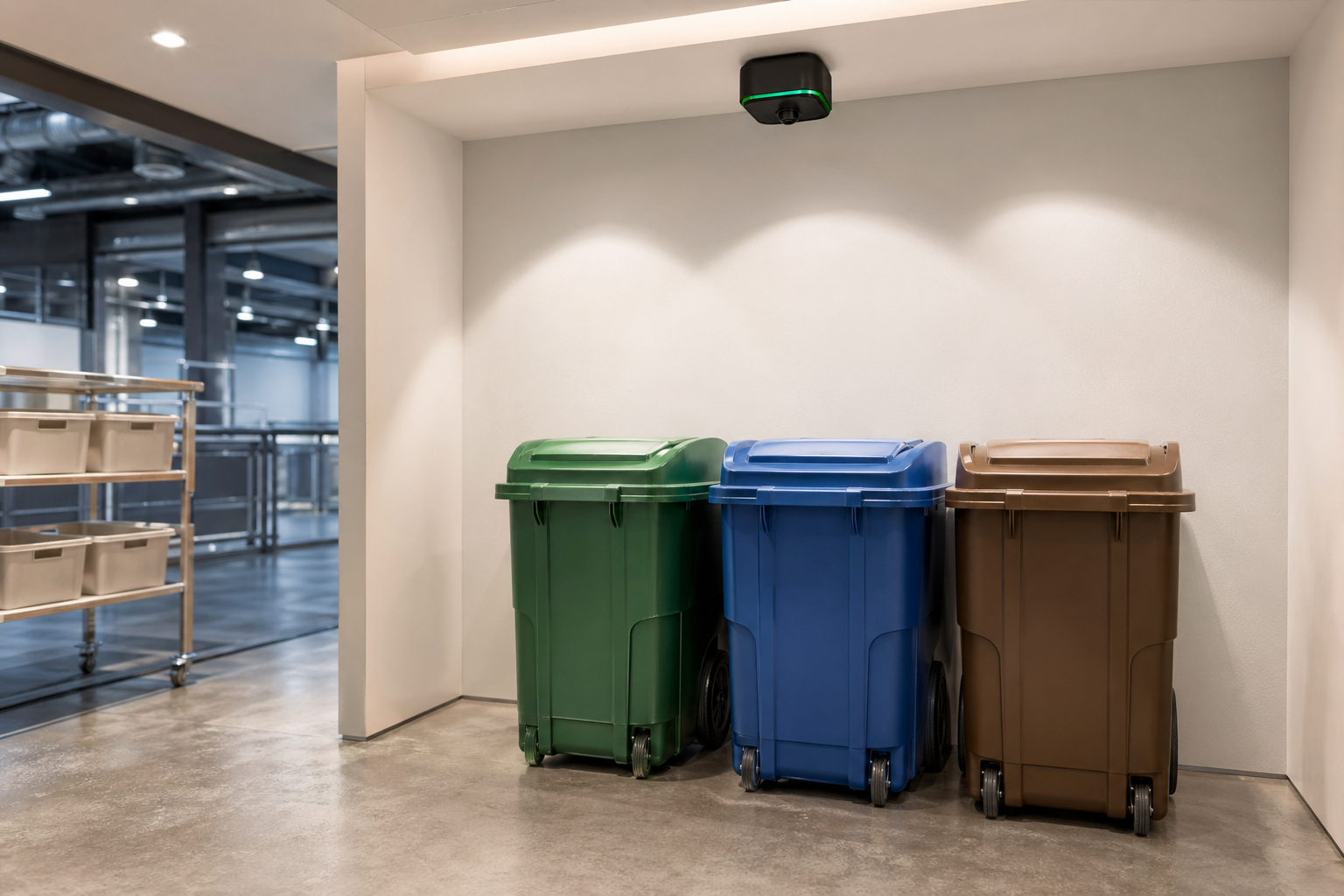
Ceiling-mounted Solace Iris sensor above three colored recycling bins in a clean indoor back-of-house area

Malls & venues

Build: IRIS-AIV-AC-WIFI-CEI
Ceiling-mounted AI sensing on 220 VAC. Detects overflow and contamination before housekeeping is called.

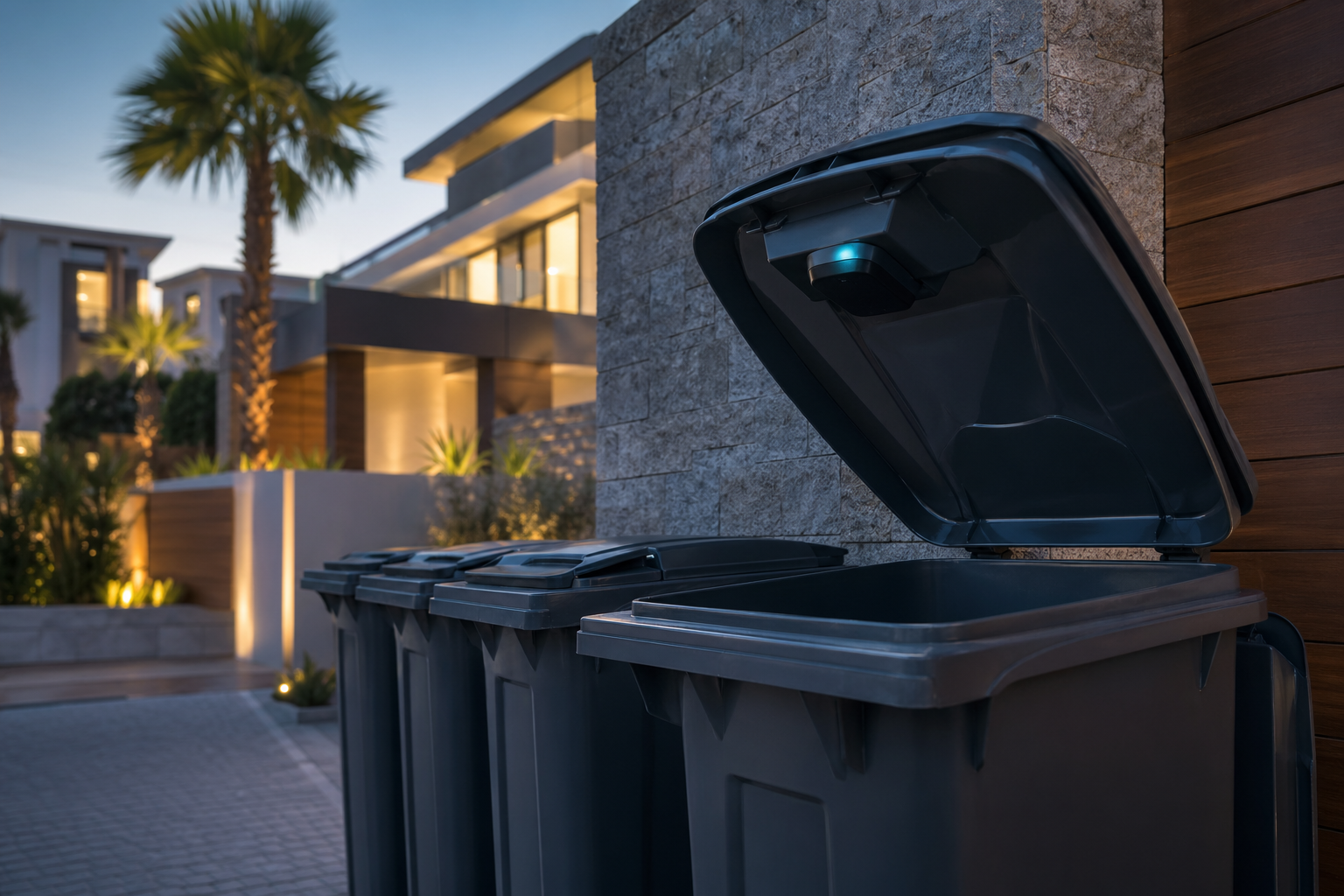
Wheelie bin with an open lid revealing an Iris sensor with cyan glow, outside a luxury residential compound at twilight

Private Bins

Build: IRIS-US-BAT-RF-BIN
Long-life ultrasonic + RF aggregation. One LAN connection, no SIM cards, up to 5-yr battery life.

Deployment

From kick-off to live in eight weeks.

A 200-bin pilot typically goes from purchase order to go-live in 6-8 weeks. The longest activity is the site survey - because we pick the right Iris variant per location, instead of dropping one device everywhere.

  1. 1

    Site Survey

    Solace surveys, picks variants, designs network.

  2. 2

    Configure

    Bin inventory loaded, cloud tenant created, integrations set up.

  3. 3

    Install

    QR scan, mount, calibrate via app.

  4. 4

    Validate

    Live readings within 60 seconds of install.

  5. 5

    Operate

    Daily dashboards, weekly reports, quarterly reviews.

Pilot Offer

Start with a focused pilot.

Launch a turnkey pilot on either line - Iris Vision on your existing cameras, or Iris Waste with mixed sensor configurations, installation, cloud subscription, and training. Measure the results before committing to full rollout.

Vision or Waste - or both Typical 6-8 week go-live Custom-scoped per site